Category: Guides

Floating and inflatable dock guides for lakes, ponds, boats and yachts: how inflatable docks compare with rigid plastic and wood, kayak and SUP launches, jet ski docking, and the inflatable kayaks, paddle boards and sea scooters that boat owners carry. Every guide uses the makers’ own specifications and points out the safety basics.

  • Inflatable vs Traditional Boat Lifts: Which Is Right for You?

    Inflatable vs Traditional Boat Lifts: Which Is Right for You?

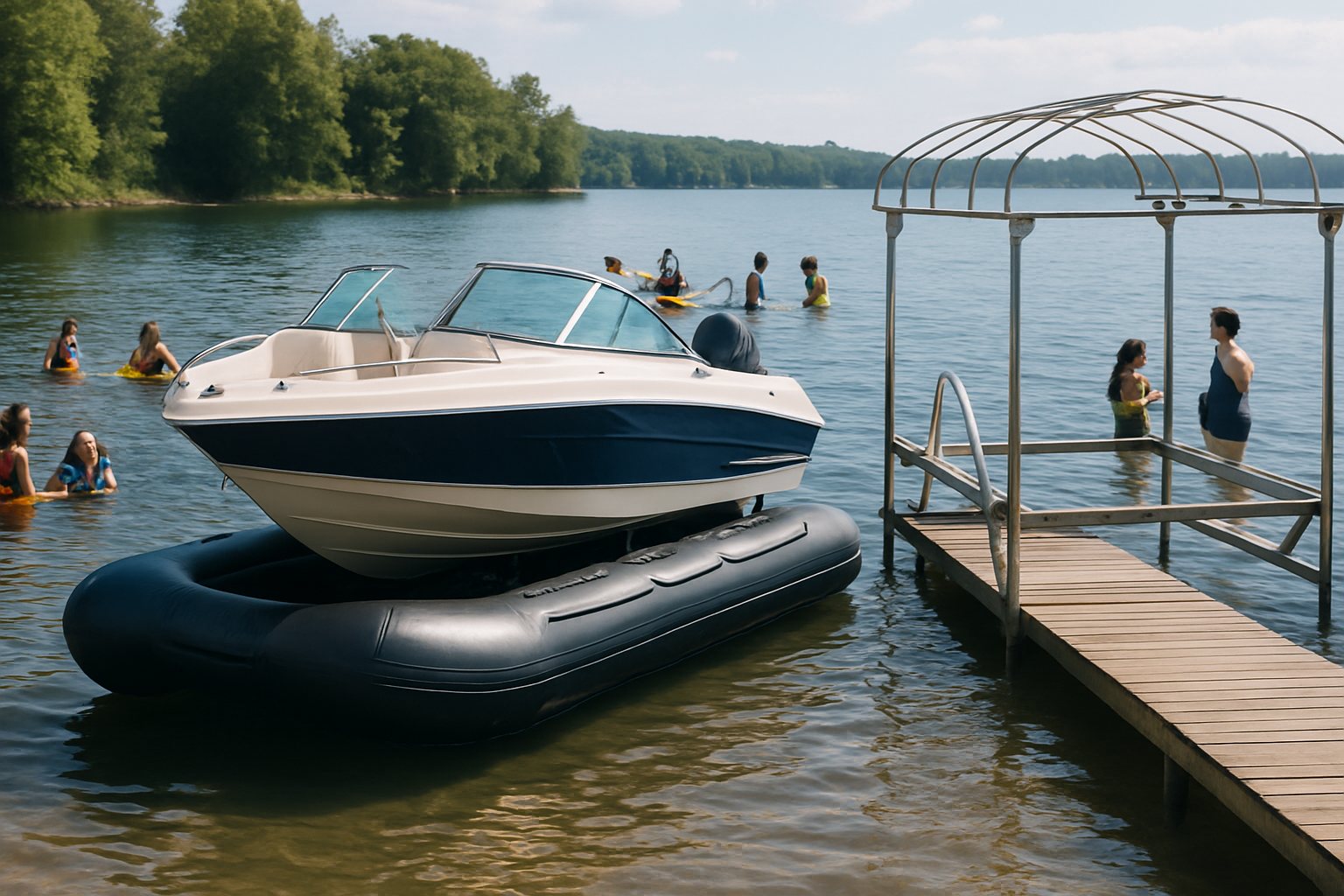
    After a long day of swimming and sun, nobody wants to scrub weed off the hull before the next trip. A boat lift keeps the boat up out of the water between outings, so it’s clean, dry and ready when the crew shows up with the cooler. This guide compares an inflatable boat dock lift vs traditional lift: how each one works, what each is good at, what to ask before you buy, and how to use a lift safely. An inflatable boat lift is a type of floating boat lift: air chambers lift the hull instead of a frame fixed to the bottom.

    How each kind of lift works

    Inflatable (air) lifts

    An inflatable or air lift uses buoyancy instead of cables. Air chambers or tanks sit under the boat; a blower fills them with air and they rise, lifting the boat clear of the water. Let the air out and the lift sinks back so you can float the boat off. Most are floating systems tied to a dock, so they ride up and down with the water level.

    Traditional lifts

    Traditional lifts are metal frames, usually aluminum or galvanized steel, standing on the lake or river bottom. A cradle or bunks hold the hull, and a winch, electric motor or hydraulic system raises and lowers it. You’ll see vertical lifts, cantilever lifts and lifts built into a boathouse or permanent dock.

    Inflatable boat dock lift vs traditional lift: the trade-offs

    Water depth and bottom

    A frame lift needs a firm, fairly level bottom and works within a set depth range. Floating air lifts don’t stand on the bottom, which helps in deep water, over soft mud, or where the level changes a lot through the season.

    Installation

    Both are real installations. A frame lift has to be placed, leveled and set for your hull, often by a dealer. An air lift must be sized for your boat’s weight and secured to a dock that can take the load. Either way, follow the maker’s instructions or use a pro.

    Upkeep

    Frame lifts need their cables, pulleys, motor and bunks checked and serviced. Air lifts need their chambers, hoses, valves and blower kept in good shape and watched for leaks. Neither is maintenance-free.

    Seasons and ice

    Where lakes freeze, many owners pull lifts or take steps to protect them over winter. Ask a local dealer what’s normal on your water.

    Cost

    Prices vary widely with boat weight, lift type, installation and your site. Get written quotes for both types from local dealers, including installation, permits and yearly service, before you compare.

    How to choose the right lift

    1. Know your boat’s real weight. Add fuel, water, batteries and the gear you leave aboard to the dry weight, and choose a lift rated comfortably above it.
    2. Match the hull. Pontoons, V-hulls and personal watercraft need different bunks or cradles. Make sure the lift fits your boat’s shape.
    3. Look at your site. Water depth, the bottom, how much the level changes and how much wave action you get all point toward one type or the other.
    4. Check your dock. A floating lift is tied to your dock, so the dock must be strong enough for the extra load.
    5. Ask about permits. Lifts are usually permanent or seasonal structures, and many lakes and towns require approval.
    6. Ask about service. A local dealer who installs and services lifts is worth a lot when something needs fixing mid-season.

    Which one fits your situation?

    • Deep water, a soft bottom or a level that rises and falls: a floating air lift is often the easier fit.
    • Shallow, firm bottom and steady water: a frame lift is a proven, simple choice.
    • A light, flimsy dock: be careful with any lift that hangs its load on the dock; a free-standing frame may suit better.
    • A boathouse or covered slip: lifts built into the structure keep the boat out of the sun as well as the water.

    Common lift problems and what to check

    Most hiccups have simple causes. Start with these checks, and call the maker or your dealer if the fix isn’t obvious.

    • An air lift rises slowly or sags overnight. Check the blower, hoses and valves for loose fittings, then look for leaks in the chambers. Weed or debris in a hose can also slow things down.
    • The boat sits crooked. Lower it, re-center the boat over the bunks or chambers, and check that the bunks are set for your hull.
    • A frame lift is noisy or jerky. Inspect cables for fraying, pulleys for wear and the motor or winch for loose mounts. Don’t keep using a lift with a damaged cable.
    • The lift has shifted. Wind, waves and ice can move a lift over time. Check that it’s still level and secured, especially after storms.

    A quick look at the start of each month during the season, and a full check before and after winter, catches most of these early.

    Using a boat lift safely

    • Inspect the lift before each use: lines, cables, straps, chambers and fittings.
    • Never go over the rated capacity, and center the boat before lifting.
    • Nobody in the water near the lift, and nobody aboard, while it’s raising or lowering.
    • Approach slowly and switch the engine off before raising.
    • Keep kids and swimmers away from the lift area, and keep life jackets on during docking.
    • Secure the boat on the lift, and don’t operate it in storms or strong wind.
    • Fix leaks, frayed cables or worn parts right away rather than waiting for the off-season.

    For safety around slides and swim gear on the boat itself, see our boat safety tips.

    Related gear: inflatable docks for swimming

    We don’t review boat lifts, so we can’t point you to a specific lift. The products below are not lifts. They’re inflatable docks: floating swim decks you tie to your boat at anchor or float off your dock, for lounging, jumping and climbing out of the water. If you’re setting up the waterfront, they’re the fun half of the project.

    Best for boats

    Island Hopper Yacht Dock 10 x 6

    • 1,500 lb
    • Corner bumpers
    • EVA foam top
    Check price on Amazon
    Biggest swim platform

    RAVE Aqua Dock 10

    • 10 x 10 ft, 6 in drop-stitch
    • 1,800 lb / 10 adults
    • Limited lifetime warranty
    Check price on Amazon
    • Island Hopper Yacht Dock 10 x 6: a 10 x 6 ft swim deck designed to sit beside a boat, with rubber corner bumpers, an EVA foam top and stainless D-rings. It holds 1,500 lb (people, not boats).
    • Island Hopper Patio Dock 15: a 15 x 6 ft floating patio for 10 or more people, with a 12V electric pump and a six-step soft ladder included.

    Check the Island Hopper Patio Dock price on Amazon

    See all seven picks in our best inflatable docks and swim platforms guide, compare a fixed dock with an inflatable one in inflatable docks vs. traditional docks, or browse all inflatable dock guides.

    Boat dock lift questions

    Is an inflatable dock the same as an inflatable boat lift?

    No. An inflatable dock is a floating swim deck for people. An inflatable or air boat lift is a system built to raise a boat out of the water. Never try to lift or park a boat on a swim dock.

    Are inflatable boat lifts safe?

    A lift that’s correctly sized for your boat, properly installed and well maintained is designed to hold it securely. Stay within the rated capacity, inspect it regularly and follow the maker’s instructions.

    Can I install a boat lift myself?

    Some owners do, with the maker’s instructions and a few helpers. Many prefer a dealer, especially for heavier boats, tricky bottoms or anything that needs a permit.

    Can a boat lift be used in salt water?

    Many are sold for salt water, with corrosion-resistant materials. Ask the maker whether a model is rated for salt, and rinse and inspect hardware more often if it is.

    What should I do with my lift in winter?

    It depends on your climate and lift. Where water freezes, many owners pull lifts out or protect them for the season. Follow the maker’s winter guidance and ask a local dealer what works on your lake.
  • Inflatable Dock Maintenance: Cleaning, Repair and Winter Storage

    Inflatable Dock Maintenance: Cleaning, Repair and Winter Storage

    The best days on an inflatable dock feel effortless: tie it off at the sandbar, hand out the drinks, and let the kids take turns jumping into warm, clear water. A few minutes of care keeps it that way for many summers. This guide covers inflatable dock maintenance from start to finish: inflating to the right pressure, cleaning, spotting and fixing leaks, and storing your dock over the winter. An inflatable dock is a floating dock held up by air, so most of its care comes down to keeping the air chambers clean, sealed and properly stored.

    Before every trip: a quick check

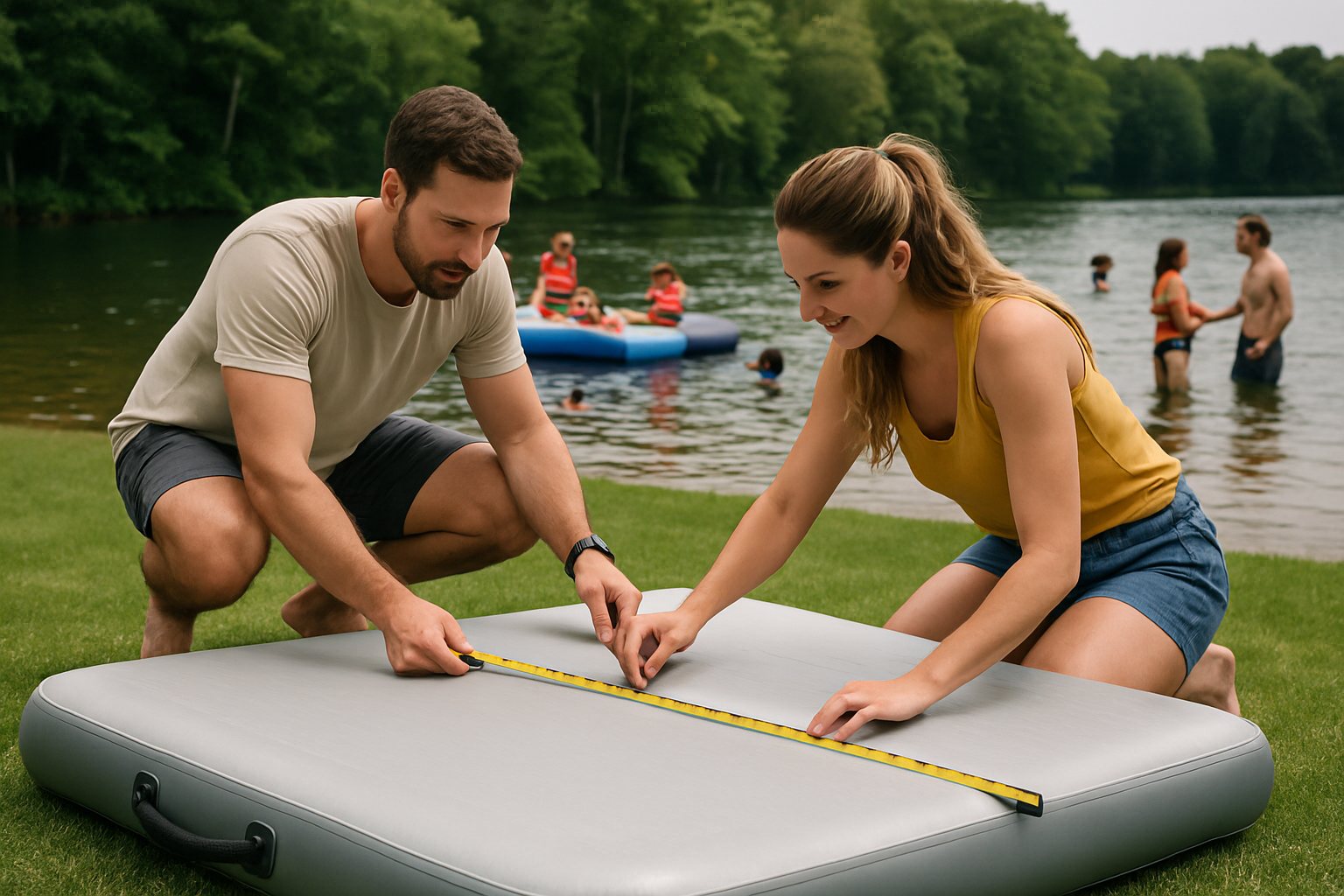
    Unroll the dock on a clean, smooth spot (a lawn or a tarp beats a gravel driveway) and take two minutes before you pump:

    • Look over the seams, corners and underside for scuffs, cuts or lifting edges.
    • Check that the valve is clean, the cap seals and the O-ring (if your valve has one) is in place.
    • Make sure D-rings and handles are firmly attached; they take a lot of load when the dock is tied to a boat.
    • Pack the pump, its hose and adapter, your lines and a repair kit.

    Inflating to the right pressure

    Drop-stitch docks are built to run at high pressure, usually 5 to 15 psi depending on the model. RAVE’s Aqua Dock runs at 5 psi, BOTE’s Hangout Dock at 6 to 10 psi, and the Island Hopper Patio Dock’s included pump auto-sets at 15 psi. Use the number in your manual, not a guess. Under-inflated, a dock sags and flexes; over-inflated, it strains the seams.

    • Use a gauge. A pump with a gauge, or an electric pump with an auto-stop, takes the guesswork out.
    • Mind the sun. Air expands as it heats. A dock pumped to full pressure in the cool morning can be over pressure by mid-afternoon on a hot deck, so let a little out or keep it in the water, and check again.
    • Top up in cold water. Cool water does the opposite, so a dock may feel softer after it’s been floating a while.

    Inflating by hand is good exercise on a 10 ft deck. Island Hopper says its 10 x 6 Yacht Dock takes about 8 minutes with the included hand pump. For bigger docks an electric pump is worth it. For first-time setup, see our guide to inflating and installing a boat dock.

    Cleaning after use

    Sunscreen, lake scum, bird droppings and salt all wear on PVC and on foam tops. Cleaning after each outing is the single most useful habit.

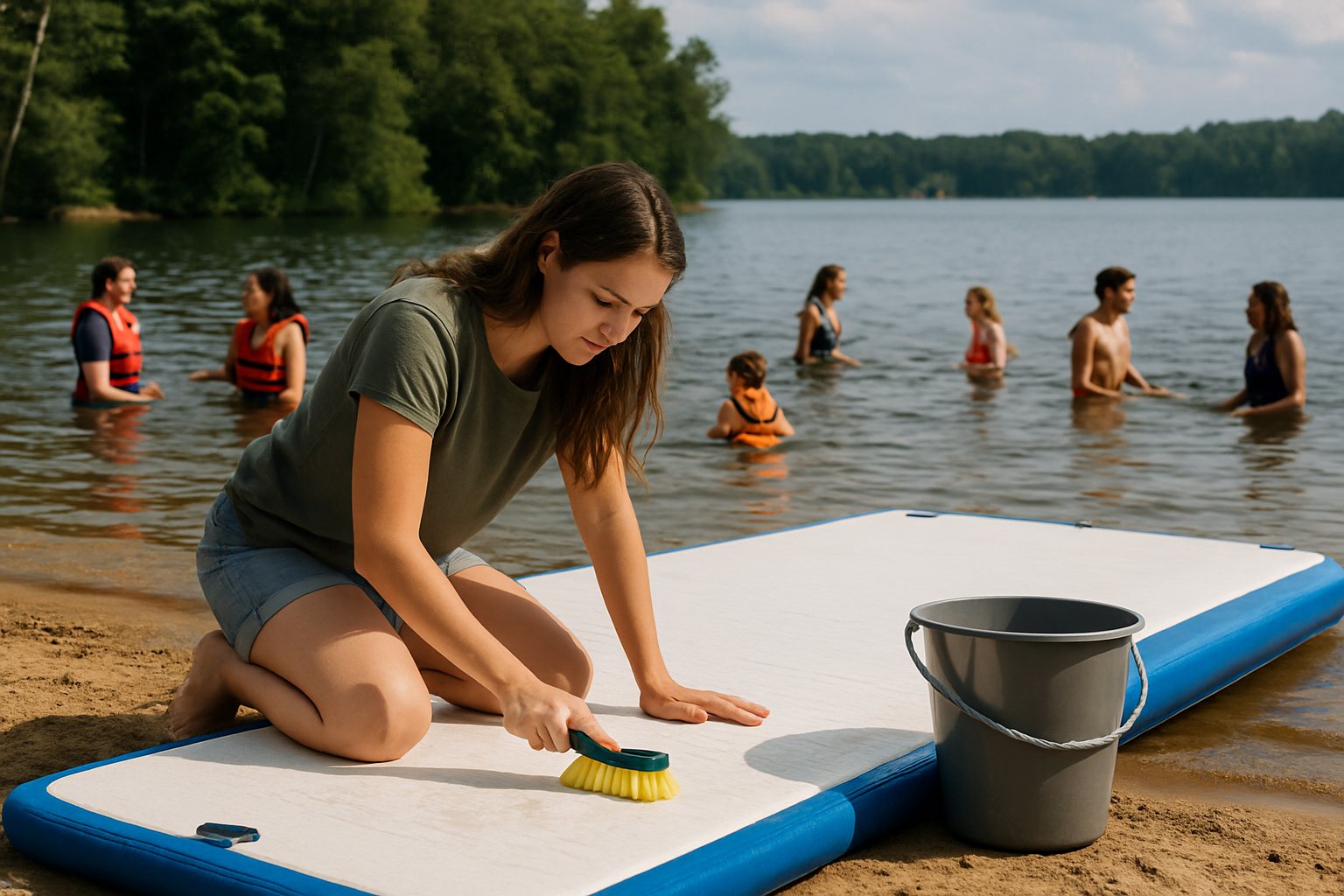
    1. Rinse the whole dock with fresh water, including the underside, valves and D-rings. Do this every time after salt water.
    2. Wash with mild soap and a soft brush or sponge. Skip bleach, solvents and harsh cleaners; they can damage PVC and glued seams.
    3. Give the foam or EVA top a gentle scrub where sunscreen collects.
    4. Rinse again and let it dry completely, both sides, before you deflate and roll it. A dock packed wet is how mildew starts.

    Between uses, keep it out of direct sun when you can. UV slowly fades and stiffens PVC; a cover or a shady spot on shore helps.

    Finding and fixing leaks

    Some pressure change from temperature is normal. A dock that goes soft overnight at a steady temperature probably has a leak.

    Find it

    • Start with the valve: it’s the most common culprit. Make sure it’s closed, clean and the cap is tight.
    • Spray soapy water over the valve, seams and any scuffed spots. Growing bubbles mark the leak.
    • Circle the spot with a marker before you deflate.

    Fix it

    1. Deflate fully and dry the area.
    2. Clean around the hole and lightly scuff it if your kit’s instructions say so.
    3. Apply a PVC patch and adhesive from the maker’s repair kit, pressing out air bubbles.
    4. Let it cure for as long as the kit says before you inflate, then test with soapy water again.

    A leaking valve may just need cleaning or tightening with a valve wrench. Leaks along a seam, large tears, or damage near the valve base are best sent to the maker under warranty or to an inflatable repair shop. Island Hopper offers five years if you register the Yacht Dock, RAVE a limited lifetime warranty for personal use, so check yours before you cut into anything.

    Storing your dock for the winter

    1. Deep clean. Wash, rinse and dry it fully, as above. Store it dirty and you’ll find stains and mildew in spring.
    2. Deflate completely. Open the valve, press out the air, then roll from the end opposite the valve so air can escape.
    3. Roll, don’t crease. Rolling loosely is gentler than tight folds, which stress the same lines every year.
    4. Bag it. Use the storage bag it came in, and keep the pump, hose and repair kit with it.
    5. Pick a cool, dry place. A closet, basement or climate-controlled storage beats an attic or a hot shed. Keep it off bare concrete and away from rodents and sharp tools.
    6. Nothing heavy on top. Stacking boxes on it flattens creases into the PVC.

    In spring, unroll it a day early, let it relax, inflate it on land and leave it a few hours to make sure it holds air before the first trip.

    Safe use helps it last

    Good habits on the water protect people and the dock. Stay under the weight limit and spread out. Keep it away from boat traffic, rocks and docks with exposed nails. Anchor the boat and switch the engine off before anyone swims, and keep the dock clear of the propeller. Kids and weak swimmers wear life jackets, with an adult watching. Bring it in before storms and strong wind. For more on keeping everyone safe around boats and slides, see our boat slide safety tips.

    Docks that are easy to care for

    Shopping for a new dock, or replacing a tired one? These two are well built and backed by long warranties. Compare all seven picks in our best inflatable docks and swim platforms guide, or browse all inflatable dock guides.

    Best for boats

    Island Hopper Yacht Dock 10 x 6

    • 1,500 lb
    • Corner bumpers
    • EVA foam top
    Check price on Amazon
    Most deck for the money

    RAVE Aqua Dock 10 x 10

    • 100 sq ft
    • 1,800 lb
    • Hand pump included
    Check price on Amazon
    • Island Hopper Yacht Dock 10 x 6: heat-welded PVC with a 1000-denier rip-resistant layer that resists UV and oil stains, plus rubber corner bumpers. Five-year warranty when registered.
    • RAVE Aqua Dock 10 x 10: 100 sq ft of drop-stitch deck at 5 psi with a dual-action hand pump included and a limited lifetime warranty for personal use.

    Check the RAVE Aqua Dock price on Amazon

    Inflatable dock maintenance questions

    How do I clean an inflatable dock?

    Rinse it with fresh water, wash with mild soap and a soft brush, rinse again and let it dry completely before rolling it up. Avoid bleach and harsh solvents.

    How do I prevent mildew on my dock?

    Never pack it wet. Dry both sides and the valve area in the air, and store it somewhere cool, dry and ventilated rather than a damp shed or a sealed plastic tub.

    Why is my inflatable dock losing air?

    Temperature is the usual reason: cool water and evening air lower the pressure. If it keeps going soft at a steady temperature, check the valve first, then spray soapy water over the seams to find a leak.

    Can I leave my inflatable dock in the water all season?

    Some platforms are built for it with a proper anchor system, like the Aquaglide C Lounge. Most boat docks are made to be packed up after use. If you leave one out, anchor it well, check pressure often and bring it in before storms.

    Do I need an electric pump?

    Not strictly, but it helps. A hand pump works, though it takes real effort on a 10 ft deck at higher pressure. Overton’s says a high-volume pump or shop vac works for its dock; the Island Hopper Patio Dock comes with a 12V electric pump.

    Is it OK to use an inflatable dock in salt water?

    Yes. Just rinse it, the valves and the D-rings with fresh water after every saltwater day, so salt doesn’t build up in seams and fittings.

  • Inflatable Docks vs Traditional Docks: Which Is Right for You?

    Inflatable Docks vs Traditional Docks: Which Is Right for You?

    Picture a lazy summer afternoon at the lake: the boat is tied up, the kids are cannonballing off the end of the dock, and someone is already floating with a drink in hand. Whether that dock is wood on pilings or drop-stitch PVC pumped up hard changes a lot about your budget, your weekends and your shoreline. This guide compares inflatable docks vs traditional docks on cost, setup, care, stability, weather and how you actually use the water, so you can pick the one that fits. Strictly speaking an inflatable dock is a floating dock too, just one that uses pressurized air rather than foam, plastic cubes or metal pontoons for buoyancy.

    Two very different kinds of dock

    Inflatable docks and dock floats

    A modern inflatable dock is made of drop-stitch PVC, the same construction as inflatable paddle boards. Thousands of threads tie the top and bottom together, so when you pump it to 5 to 15 psi it stays flat and firm enough to stand, sit and jump on. Most are 6 to 8 in thick and roughly 10 ft long, with D-rings and handles for tying off and climbing aboard.

    You can clip one to your boat’s stern at anchor, float it in front of a lake house, or anchor it as a swim platform. At the end of the day it deflates and rolls into a bag.

    Traditional docks

    Traditional docks are built from wood, aluminum or composite decking. Some stand on posts or pilings driven into the bottom; others float on sealed foam or plastic floats and are anchored or hinged to shore. They are built to stay put for years, to hold a boat alongside, and to carry foot traffic every day of the season.

    Inflatable docks vs traditional docks, side by side

    • Purpose. Inflatable: a swim deck, lounge and launch pad. Traditional: a permanent place to tie up, load and walk on every day.
    • Setup. Inflatable: unroll, pump, tie off, often in well under half an hour. Traditional: planning, materials and often a contractor.
    • Portability. Inflatable: goes with you on the boat or to a rental cabin. Traditional: stays where it’s built.
    • Feel underfoot. Inflatable: firm but with a gentle sway. Traditional: solid, especially on pilings.
    • Weather. Inflatable: comes in before storms. Traditional: built to ride out a season, with its own upkeep.
    • Permits. Inflatable: usually none for a dock you pack up daily. Traditional: often needs approval from your town, lake association or state.

    Cost: what you pay up front and over time

    Inflatable docks have a clear price tag. When we checked in October 2026, the boat-friendly Island Hopper Yacht Dock (10 x 6 ft) was about $750, the RAVE Aqua Dock (10 x 10 ft) about $800, and the 15 ft Island Hopper Patio Dock about $1,199. Budget a little more for an electric pump if one isn’t included.

    A traditional dock has no single price. It depends on length, materials, your bottom and water depth, local labor, and any permits. Get quotes from local dock builders before you compare, and ask what yearly upkeep they expect.

    Over time, an inflatable dock’s costs are mostly patches, a pump and eventually a replacement after many seasons. A fixed dock’s are sealing or replacing boards, hardware and seasonal work such as pulling sections out before ice.

    Setup, care and the weather

    Living with an inflatable dock

    Island Hopper says its 10 x 6 Yacht Dock inflates in about 8 minutes with the included hand pump. Bigger, higher-pressure decks go faster with an electric pump; the Island Hopper Patio Dock includes a 12-volt one. Care is simple: rinse it, let it dry before you roll it up, keep it out of the sun when you’re not using it, and patch small holes early. Our inflatable dock maintenance guide covers the details.

    Bring it in before storms and strong wind. If you leave one out, anchor it well and check the pressure, since heat makes the air expand.

    Living with a traditional dock

    A fixed dock is ready every morning with no pumping. In return, it needs regular checks of boards, fasteners and floats, cleaning and sealing, and in cold climates a plan for ice. On tidal water, piling docks don’t rise and fall, so many owners use floating sections with a ramp.

    Which is right for you?

    Choose an inflatable dock if you want a swim platform that goes with the boat, you rent or have only a short stretch of shoreline, you can’t build a fixed structure, or you want a place to lounge and launch paddle boards and kayaks at anchor.

    Choose a traditional dock if you own waterfront, keep a boat in the water all season, need a solid place to load gear and passengers every day, or want something that stays put.

    Or both. Plenty of lake houses keep a fixed dock for the boat and float an inflatable swim platform off the end for the kids. Add a dock slide and the afternoon takes care of itself.

    Inflatable docks we like

    If an inflatable dock fits your plans, these three cover most needs. For all seven picks, sizes and prices, see our best inflatable docks and swim platforms guide.

    Best for boats

    Island Hopper Yacht Dock 10 x 6

    • 1,500 lb
    • Corner bumpers
    • EVA foam top
    Check price on Amazon
    Most deck for the money

    RAVE Aqua Dock 10 x 10

    • 100 sq ft
    • 1,800 lb
    • Hand pump included
    Check price on Amazon
    • Island Hopper Yacht Dock 10 x 6: designed to sit beside a boat, with rubber corner bumpers to protect your gelcoat and an EVA foam top. It holds 1,500 lb, weighs 53 lb and rolls up small.
    • RAVE Aqua Dock 10 x 10: a full 100 sq ft for about 10 adults (1,800 lb), with handles all around and two anchor points. It needs at least 4 ft of water.
    • Island Hopper Patio Dock 15: a 15 x 6 ft floating patio for big groups, rated over 2,000 lb, with a 12V electric pump and a soft ladder in the box.

    Check the Island Hopper Yacht Dock price on Amazon

    Still deciding on the type of float? Our guide to choosing the right inflatable dock float goes deeper on size, thickness and pumps. Browse all inflatable dock guides.

    Inflatable vs traditional dock questions

    Is an inflatable dock as stable as a wooden dock?

    Not quite. A good drop-stitch dock is firm enough to stand, sit and jump on, but it floats, so it moves a little with waves and when people gather on one edge. Thicker docks flex less. A dock on pilings is the most solid underfoot.

    Can an inflatable dock replace a permanent dock?

    For swimming, lounging and launching paddle boards, often yes. For mooring a boat all season and loading people and gear every day, a traditional dock is the better tool. Some platforms, like the Aquaglide C Lounge, are made to stay anchored all summer, but they are still swim platforms rather than boat docks.

    How much weight can an inflatable dock hold?

    It depends on the model. Among the docks we compared, limits run from 1,100 lb to over 2,000 lb. Always check the maker’s rating and count people plus coolers and gear.

    Do inflatable docks handle rough water?

    They’re made for calm water. Use them at anchor in protected spots, keep them away from boat traffic, and bring them in when wind, waves or storms pick up.

    Which is better for the lake or river bottom?

    An inflatable dock tied to a boat touches the bottom only through the boat’s anchor, and it leaves with you. A fixed dock is a lasting structure, which is one reason many areas ask for a permit. If you go inflatable, make it last: keep it out of the sun when not in use, repair rather than replace, and recycle old PVC where your town accepts it.

  • Choosing an Inflatable Dock Float: Sizes, Features and Safety

    Choosing an Inflatable Dock Float: Sizes, Features and Safety

    Drop anchor in a quiet cove, roll a firm floating deck off the stern, and the boat suddenly has a back porch: a place to dangle your feet, sunbathe, and launch the kids into the water. That deck is an inflatable dock float. This guide is about choosing an inflatable dock float: what the different kinds are, which size and features matter, how to use one safely, and what to know before you try to build your own. An inflatable dock float works like any floating dock section, except it is held up by air chambers instead of foam or plastic.

    What an inflatable dock float is

    The good ones are made of drop-stitch PVC, the same construction as inflatable paddle boards. Thousands of fibers link the top and bottom layers, so at 5 to 15 psi the float stays flat and stiff instead of ballooning. That’s the big difference from a foam water mat, which is about 1.5 in thick and bends under you. A dock float is 6 to 8 in thick and feels much more like a real deck.

    The main types

    • Boat docks. Around 10 x 6 ft, light enough to carry (roughly 50 to 60 lb) and made to tie to a stern as a swim step.
    • Square swim platforms. About 10 x 10 ft, plenty of room for a family to lounge and jump.
    • Long patios and walkways. 15 ft decks for big groups; some can be joined end to end.
    • Lounging docks. Platforms with a mesh water hammock or built-in seating, made for slow afternoons rather than cannonballs.

    Choosing an inflatable dock float: what matters

    Boat or shore

    For tying off to a boat, choose something you can carry and stow, with bumpers or soft edges so it won’t mark the hull. For a lake house, a bigger, heavier platform with a proper anchor system makes sense.

    Size and weight limit

    Count how many people will be on it at once, plus the cooler. The docks we compared hold from 1,100 lb to over 2,000 lb. A 10 x 6 ft deck is cozy for a crowd; a 10 x 10 ft deck gives a family room to spread out. Then check that it fits the space at the stern or along your shoreline.

    Thickness and pressure

    Thicker is firmer. An 8 in dock flexes less than a 6 in one when several people stand near one edge. Higher working pressure also means a stiffer deck, and more pumping.

    Pump and valves

    A hand pump works but takes real effort on a 10 ft deck. If the float doesn’t come with an electric pump, budget for one, and check that its adapter fits your valve. Quick, full deflation makes packing up much easier.

    Grip, handles and tie-downs

    Look for a non-slip foam or EVA top, handles on every side so swimmers can climb on from deep water, and stainless D-rings for lines, a ladder and anchors.

    Warranty

    Warranties are a good clue to build quality. Island Hopper gives five years on its Yacht Dock if you register it; RAVE gives a limited lifetime warranty for personal use on its Aqua Dock.

    Dock floats we like

    These two cover the two most common needs: a float for the boat and a big square deck for the family. For all seven picks, see our best inflatable docks and swim platforms guide.

    Best for boats

    Island Hopper Yacht Dock 10 x 6

    • 1,500 lb
    • Corner bumpers
    • EVA foam top
    Check price on Amazon
    Most deck for the money

    RAVE Aqua Dock 10 x 10

    • 100 sq ft
    • 1,800 lb
    • Hand pump included
    Check price on Amazon
    • Island Hopper Yacht Dock 10 x 6: made to sit beside a boat, with rubber bumpers on all four corners, an EVA foam top and stainless D-rings. It holds 1,500 lb, weighs 53 lb and inflates in about 8 minutes with the included hand pump, per the maker.
    • RAVE Aqua Dock 10 x 10: 100 sq ft for about 10 adults (1,800 lb), with ten neoprene-covered handles, eight D-rings and two anchor points. It needs at least 4 ft of water.

    Check the Island Hopper Yacht Dock price on Amazon

    Using a dock float safely

    A dock float gives swimmers a stable place to rest and climb out, which is a real plus for a day at anchor. It only works if you set it up well:

    • Anchor the boat and switch the engine off before anyone gets in the water.
    • Tie the float with two lines so it can’t swing into the swim platform, and keep it clear of the propeller.
    • Check the depth before anyone jumps, and keep the landing zone clear.
    • Stay under the weight limit and spread out.
    • Kids and weak swimmers wear life jackets, and an adult always watches.
    • Keep it away from boat traffic, and bring it in when wind, current or storms pick up.

    More on this in our boat safety tips and our guide to setting up an inflatable swim platform.

    Thinking about a DIY dock float?

    Building your own floating platform is a fun project, and people do it with sealed floats or drums under a deck frame. A few honest notes before you start:

    • Drop-stitch is hard to copy at home. The stiff, flat feel of a bought dock comes from factory construction. Taped-together pool floats or air mattresses won’t give you a safe deck to stand on.
    • Buoyancy needs real numbers. Work out how much weight the float must carry with a good margin, and use flotation sold for docks.
    • No sharp edges. Round every corner, cover screws and hardware, and use a non-slip surface.
    • Test near shore first. Load it gradually in shallow water before anyone jumps from it.
    • Check local rules. Anything left moored may need approval from your town or lake association.

    For most families, a bought drop-stitch dock is lighter, safer and easier to pack than a homemade one. If you are weighing a permanent structure instead, read inflatable docks vs. traditional docks.

    Making it last

    Rinse your float with fresh water after use (always after salt), wash off sunscreen with mild soap, dry it fully before rolling, and store it cool, dry and out of the sun. Check the valve and seams before each trip and patch small holes early. Our inflatable dock maintenance guide covers cleaning, repairs and winter storage. Browse all inflatable dock guides.

    Inflatable dock float questions

    What size inflatable dock float do I need?

    For a couple or a small family at the stern, a 10 x 6 ft boat dock is plenty. For a group that wants to lounge and jump, a 10 x 10 ft deck gives far more room. Big parties and lake houses can look at 15 ft platforms.

    How much weight can a dock float hold?

    It depends on the model: the docks we compared are rated from 1,100 lb to over 2,000 lb. Use the maker’s rating and count people plus gear.

    Do I need to buy a pump separately?

    Sometimes. Many docks include a hand pump, and a few include an electric one, like the Island Hopper Patio Dock. Some, like Overton’s dock, include no pump at all. An electric pump is worth having for any 10 ft deck.

    Can I repair a punctured dock float?

    Small holes, yes: dry and clean the area, then use a PVC patch and adhesive from the maker’s kit and let it cure before inflating. Seam leaks and big tears are best left to the maker or an inflatable repair shop.

    Can kids use an inflatable dock float?

    Yes, and they usually love it. Put them in life jackets, keep an adult watching, check the depth before jumping, and make sure the boat is anchored with the engine off.

  • Best Inflatable Docks and Swim Platforms 2026: 7 Picks Compared

    Best Inflatable Docks and Swim Platforms 2026: 7 Picks Compared

    Anchor up, clip a firm, flat deck to the stern, and suddenly the boat has a back porch on the water: somewhere to sit with your feet in the lake, a launch pad for cannonballs, and an easy step back aboard instead of a wobbly ladder. That’s an inflatable dock. Unlike a foam mat, it’s made of drop-stitch PVC (the same stuff as inflatable paddle boards) pumped up hard, so it stays stiff enough to stand, sit and jump on. This guide covers the best inflatable docks and floating swim platforms for 2026, from boat-friendly 10 x 6 ft decks to 15 ft lounging platforms, and how to pick one.

    Prices change often. The prices below are what we saw at the maker or a major retailer in October 2026; check the current price before you buy.

    Our top picks

    Best overall

    BOTE Hangout Dock

    • 7 x 7 or 10 x 10 ft
    • 8 in thick
    • Up to 2,100 lb
    See it at the store
    Best for boats

    Island Hopper Yacht Dock 10 x 6

    • 1,500 lb
    • Corner bumpers
    • EVA foam top
    Check price on Amazon
    Most deck for the money

    RAVE Aqua Dock 10 x 10

    • 100 sq ft
    • 1,800 lb
    • Hand pump included
    Check price on Amazon
    Best value

    Overton's Inflatable Floating Dock 10 x 8

    • 1,320 lb
    • 6 stainless D-rings
    • No pump
    See it at the store
    Best for lounging

    Driftsun Floating Oasis

    • 15 x 6.5 ft
    • Water hammock
    • 1,100 lb
    See it at the store
    For a lake house

    Aquaglide C Lounge

    • 8 people, 1,600 lb
    • 14.7 ft C shape
    • Cooler drop
    See it at the store

    Docks and swim platforms compared

    DockSizeWeight limitPump includedAbout (Oct 2026)
    BOTE Hangout Dock7 x 7 ft or 10 x 10 ft, 8 in thick1,050 / 2,100 lbHand pumpabout $999
    Island Hopper Yacht Dock10 x 6 ft, 6 in thick1,500 lbHand pumpabout $750
    RAVE Aqua Dock 1010 x 10 ft, 6 in thick1,800 lbHand pumpabout $800
    Overton’s Floating Dock10 x 8 ft, 6 in thick1,320 lbNo$470–700
    Island Hopper Patio Dock 1515 x 6 ft, 6 in thickOver 2,000 lb12V electricabout $1,199
    Driftsun Floating Oasis15 x 6.5 ft, 6 in thick1,100 lb2 hand pumpsabout $1,080
    Aquaglide C Lounge14.7 x 14.7 ft1,600 lb, 8 peopleNoabout $1,980

    The best inflatable docks and swim platforms

    1. BOTE Hangout Dock: best overall

    BOTE’s Hangout Dock is the thickest and stiffest dock here at 8 in, made with BOTE’s AeroBOTE inflatable construction. It comes in two sizes: 7 x 7 ft (1,050 lb, 35 lb, 6–8 psi) and 10 x 10 ft (2,100 lb, 83 lb, 8–10 psi). Both have D-rings, include a hand pump (an electric pump is sold separately) and carry a two-year warranty. The big draw is the system: BOTE’s Hangout lounges and couches link to it, so you can build out a floating living room over time. BOTE lists it at $999.

    • Good: very firm underfoot; the 10 ft version has the highest weight limit here.
    • Watch out: the 10 ft dock weighs 83 lb; the hand pump will take a while at 8–10 psi.
    • Best for: lake houses and owners who want to add lounges later.

    See it at BOTE

    2. Island Hopper Yacht Dock 10 x 6: best for boats

    Island Hopper designed this one to sit next to a boat. It’s 10 x 6 ft and 6 in thick, made of heat-welded PVC with a 1000-denier rip-resistant layer that resists UV and oil stains, with a slip-resistant EVA foam top and rubber bumpers on all four corners so it won’t scuff your gelcoat. It holds 1,500 lb, weighs 53 lb, has stainless steel D-rings for mooring, and rolls to 40 x 16 x 14 in. The maker says it inflates in about 8 minutes with the included hand pump, and gives a five-year warranty if you register it. About $749 at Island Hopper.

    • Good: corner bumpers and an EVA top; long warranty.
    • Watch out: 6 ft wide is cozy for a crowd; the bigger 10 x 10 Mega Yacht Dock (2,000 lb) was sold out at the maker.
    • Best for: tying off to a cruiser, pontoon or sailboat as a swim step.

    Check the Island Hopper Yacht Dock price on Amazon

    3. RAVE Aqua Dock 10 x 10: most deck for the money

    RAVE’s Aqua Dock gives you a full 100 sq ft for about $800 (list $1,099.99). It’s 10 x 10 ft and 6 in thick in drop-stitch PVC at 5 psi, holds about 10 adults or 1,800 lb, and weighs 69 lb. Four non-slip foam corners make spots to lounge or set a cooler, eight D-rings let you strap gear down, ten neoprene-covered handles help swimmers climb on, and two anchor points hold it in place. A dual-action hand pump is included, it needs at least 4 ft of water, and RAVE gives a limited lifetime warranty for personal use.

    • Good: big, square and well equipped; long warranty.
    • Watch out: doesn’t connect to RAVE’s trampolines or bouncers; heavy to carry.
    • Best for: families who want maximum space per dollar.

    Check the RAVE Aqua Dock price on Amazon

    4. Overton’s Inflatable Floating Dock 10 x 8: best value

    Overton’s house-brand dock covers the basics well: 10 x 8 x 6 in of high-pressure drop-stitch, a 1,320 lb limit, six stainless steel D-ring tie-downs and six reinforced grab handles, at 60 lb. It uses an H3 high-pressure valve and doesn’t come with a pump, though Overton’s says a high-volume pump or shop vac works. It was on sale for about $470 (regular about $700).

    • Good: lots of deck for the sale price.
    • Watch out: budget for a pump; warranty not listed on the product page.
    • Best for: a first dock without a big spend.

    See it at Overton's

    5. Island Hopper Patio Dock 15: biggest swim platform

    The Patio Dock is a 15 x 6 ft, 6 in thick floating patio for 10 or more people, rated for over 2,000 lb. It’s 1500-denier drop-stitch with a soft EVA top, weighs 71 lb, and is the only dock here with a 12-volt electric 15 psi auto-set pump in the box, plus a six-step soft ladder for climbing on from deep water. Several can be joined into a longer platform. Overton’s lists it at $1,199.

    • Good: electric pump and ladder included; long enough to work as a walkway.
    • Watch out: expensive and heavy; a long, narrow shape takes more anchoring in wind.
    • Best for: big boat parties and lake houses.

    Check the Island Hopper Patio Dock price on Amazon

    6. Driftsun Floating Oasis (Mesa Dock 15 ft): best for lounging

    Driftsun’s largest Mesa dock is 15 x 6.5 ft and 6 in thick, with a mesh water hammock in the middle where you can lie half in the lake. It’s UV-resistant layered drop-stitch PVC, holds 1,100 lb, has neoprene handles on all sides and anchor D-rings, and comes with two dual-action pumps for its two valves (about 6 minutes to inflate, per the retailer). It packs to 36 x 16 x 16 in. Driftsun’s own website no longer showed docks when we checked; Exit15 listed it in stock at about $1,080.

    • Good: the hammock is a lovely way to cool off.
    • Watch out: the lowest weight limit for its size; check availability before you count on it.
    • Best for: lazy afternoons rather than jumping.

    See it at Exit15

    7. Aquaglide C Lounge: for a lake-house swim platform

    For a platform that stays out all summer in front of the house, Aquaglide’s C Lounge is a 14.7 ft C-shaped floating lounge with wraparound seating, swim-up access and a drop-in spot for a cooler. It’s 15 cm (about 6 in) drop-stitch in commercial-grade 31 oz fabric, seats 8 adults (1,600 lb), and connects to other Aquaglide lounges on up to two sides. It’s a fixed installation: Aquaglide calls for at least 4.8 ft of water, 3.3 ft from shore, and 4,400 lb of total anchor weight. No pump included; three-year warranty. About $1,980 at Aquaglide.

    See it at Aquaglide

    How to choose a floating dock or swim platform

    • Boat or shore? For tying off to a boat, pick something you can carry and stow (about 50–60 lb) with bumpers or soft edges. For a lake house, bigger and heavier is fine, and a fixed anchor system makes sense.
    • Thicker is firmer. Docks run 6 to 8 in thick. Thicker docks flex less when several people stand near one edge.
    • Get an electric pump. Drop-stitch docks run at 5 to 15 psi. A hand pump works but takes real effort on a 10 ft deck; only the Island Hopper Patio Dock includes an electric one.
    • Count the attachment points. Stainless D-rings and handles on every side make it easier to tie to a boat, add a ladder, and climb on from deep water.
    • Check water depth. RAVE asks for at least 4 ft under its dock, Aquaglide at least 4.8 ft for the C Lounge. Deep enough for jumping is deeper still.

    More ways to use an inflatable dock

    A dock is not just a swim step. Once it’s pumped up and tied off, it turns into whatever the afternoon needs. A few favorites:

    • Paddle and kayak launch. A firm, flat deck at water level makes it far easier to climb onto a paddle board or slide into an inflatable kayak than going over the side of the boat.
    • A quiet fishing spot. Early morning, a folding stool and a rod: the dock gives you room to cast away from the boat’s lines and gear.
    • Sunrise stretches. Drop-stitch decks are stiff enough for gentle yoga or stretching on calm water. The slight sway is part of the fun.
    • Floating lounge and picnic deck. Towels, a cooler on the foam corners, feet in the water while the sun goes down.

    It also helps when your shoreline is short. If you rent a lake house, have only a few feet of waterfront, or can’t build a permanent dock, an inflatable one gives you a place to swim from and step off that packs away in a bag at the end of the season. Check local rules before you leave anything moored long term. If you’re weighing it against a fixed dock, see inflatable docks vs. traditional docks.

    Setup, safety and care basics

    A few habits keep the day easy and everyone safe:

    • Pick calm water. Set up away from boat traffic, strong current and rocks or debris, and have a helper; even the 53 lb Island Hopper Yacht Dock is awkward for one person.
    • Anchor first, engine off. Anchor the boat and switch the engine off before anyone swims to or jumps from the dock, and keep the dock clear of the propeller.
    • Respect the weight limit. Count people and the cooler, and spread out rather than crowding one edge.
    • Check depth before jumping. Follow the depth the maker gives, and keep the landing zone clear.
    • Kids and weak swimmers in life jackets. Always with an adult watching.
    • Come in when the weather turns. Strong wind can push a dock around even when it’s tied off.

    Care is simple: rinse with fresh water (especially after salt), wash off sunscreen and grime with mild soap, let it dry fully before rolling it up, and store it cool, dry and out of the sun. Check the valve and seams before each trip and patch small holes early. Our inflatable dock maintenance guide walks through cleaning, repairs and winter storage, and this setup guide covers inflating and installing step by step.

    Prefer something softer and cheaper to roll out? See our floating water mat guide. For seats and cup holders, try a floating island, and add a pontoon boat slide for the full water park. Browse all inflatable dock and floating platform guides.

    Dock and swim platform questions

    What’s the difference between an inflatable dock and a water mat?

    A water mat is a flexible foam sheet about 1.5 in thick that floats on the surface and bends under you. An inflatable dock is drop-stitch PVC pumped to high pressure, 6 to 8 in thick, so it stays flat and firm like a real deck and is easier to climb onto.

    How do you attach an inflatable dock to a boat?

    Run lines from the dock’s D-rings to your stern cleats with the boat anchored and the engine off. Use two lines so it can’t swing into the swim platform, and keep it clear of the propeller. Docks with corner bumpers, like the Island Hopper Yacht Dock, protect the hull.

    How long does it take to inflate a floating dock?

    Island Hopper says about 8 minutes for its 10 x 6 Yacht Dock and about 15 minutes for the 10 x 10 with a hand pump; the Driftsun retailer says about 6 minutes with two pumps. An electric pump makes it easier, especially at higher pressures.

    Can you leave an inflatable dock out all summer?

    Some are built for it, like the Aquaglide C Lounge with a proper anchor system. Most boat docks are meant to be packed up after use. If you leave one out, anchor it well, check pressure (heat makes air expand) and bring it in before storms.

    Can you use an inflatable dock in saltwater?

    Yes, they’re used on lakes, rivers and at sea. After a day in salt water, rinse the dock, valves and D-rings with fresh water and let it dry before you pack it, so salt doesn’t build up in the seams and fittings.

    Do you need a permit for an inflatable dock?

    Usually not for a dock tied to your boat and packed up the same day. Leaving a platform anchored in one spot for the season is different: rules vary by lake, town and marina, so check with your local authority or HOA first.

    How long does an inflatable dock last?

    With good care, many seasons. Sun, sharp edges and being stored wet or dirty are what wear docks out. Warranties give a clue to build quality: two years for BOTE, five years (registered) for the Island Hopper Yacht Dock and a limited lifetime warranty for personal use on the RAVE Aqua Dock.