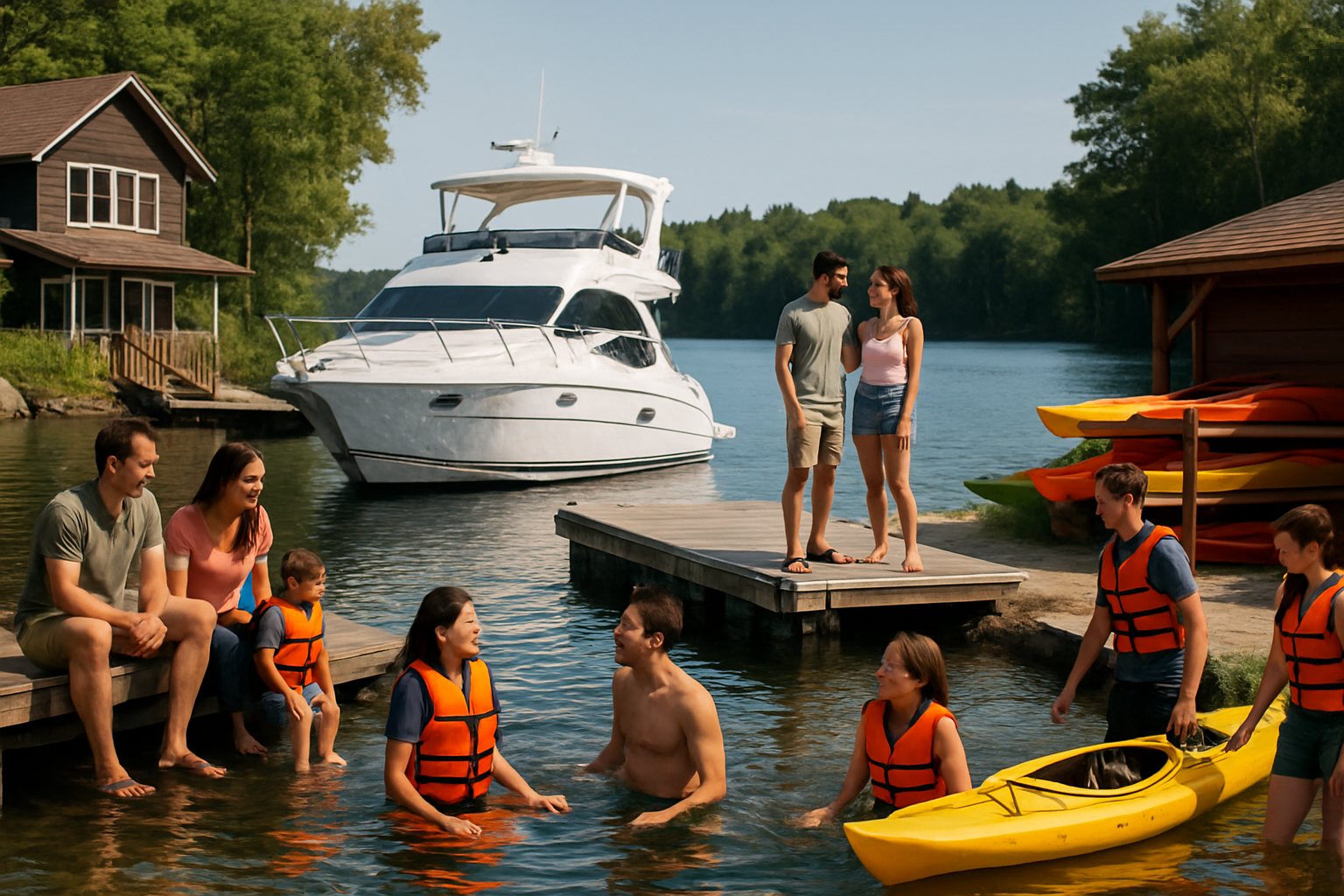
A lake-house owner, a yacht captain, a resort’s beach manager and a marina operator can all end up looking at the same drop-stitch dock. What they need from it, and what they need to ask before buying, is completely different. A family wants an easy summer; a resort needs a dock that survives a season of guests and an insurer’s questions. This section starts from who you are, and treats commercial floating docks and inflatable docks for business separately from home use.
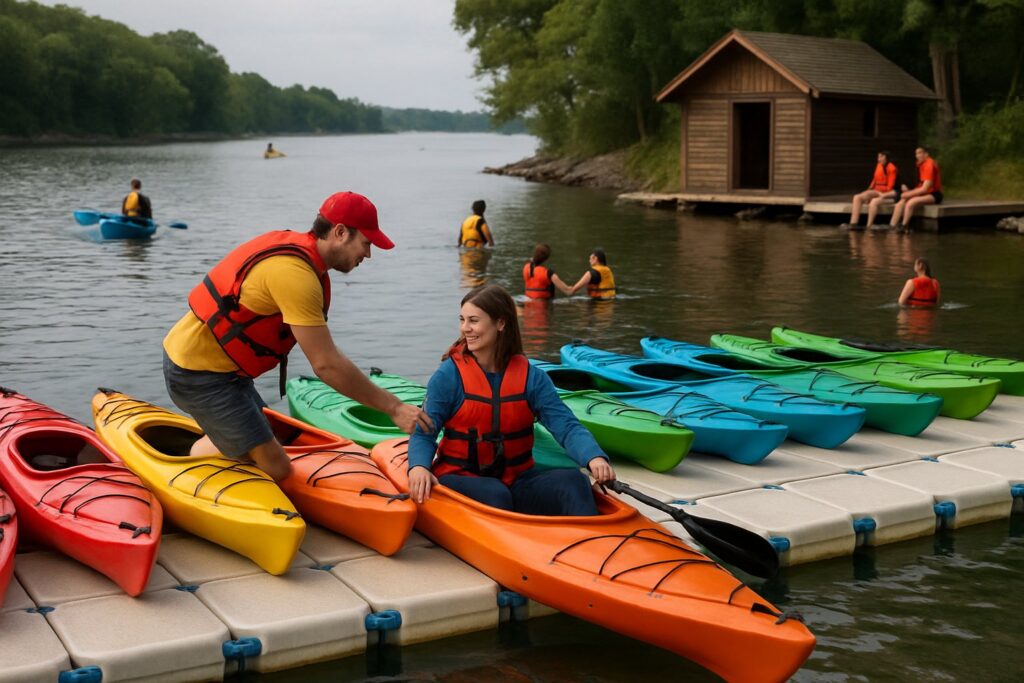
In short: homeowners and boat owners buy consumer docks and should check depth, anchoring and the maker’s people rating. Businesses must also check the warranty for commercial use (often shorter or excluded), insurance, local permits, and whether the use counts as public passenger boarding, which needs certified equipment. No consumer dock is rated for that.
Find your page
| You are | What usually matters most | Read |
|---|---|---|
| A homeowner or lake-house owner | Easy setup, family safety, storage, local raft and dock rules | Homeowners and lake houses |
| A boat or yacht owner, or crew | Stowage, attachment to the boat, toys and tenders, sheltered anchorages | Boat and yacht owners |
| A resort or hotel | Guest safety, supervision, commercial warranty, insurance | Resorts and hotels |
| A marina, rental or charter business | Daily use, liability, permits, passenger rules | Marinas, rentals and charter |
Commercial floating docks: what changes for a business
- Warranty. Commercial use is often covered for less time, or not at all. Aquaglide, for example, gives its Half Deck a 3-year residential warranty but 1 year for light commercial use. RAVE’s Aqua Dock carries a limited lifetime warranty; ask whether it covers rentals.
- Mixing brands. Aquaglide forbids combining its products with other brands’ products. If you build a layout, stay within one maker’s system.
- Capacity definitions. Listings conflict: BOTE’s 10 ft dock is 2,100 lb on BOTE’s site and 1,500 lb at some retailers. Get the figure that applies to people, in writing.
- Weather limits. None of the consumer listings we found publish wind or wave limits. Your operating rules have to set them, with the maker’s input.
- Passenger boarding. Singapore’s Maritime and Port Authority requires pontoons used as temporary passenger landing platforms to be certified by a classification society; check what your own marine authority requires.
- Permits. In the US, the Army Corps of Engineers regulates structures in navigable waters, and states and counties add their own rules for rafts and docks.
Docks built for business use
Some makers sell to commercial buyers directly. Northern Diver markets its FloatDeck to commercial users and as a temporary pontoon; FreeStyle Cruiser, NautiBuoy, Henshaw and FunAir build yacht docks used on charter yachts; Airquee builds custom marine inflatables for regattas, boat shows and resorts. Most are quote items. These records show what each maker publishes:
Northern Diver FloatDeck
by Northern Diver
- Size (as stated): 1 to 10 m lengths
- Thickness: 8 cm drop-stitch
Henshaw Jet Ski Dock (single and twin)
by Henshaw Inflatables
- Thickness: About 100 mm double-wall drop-stitch top
FunAir Toy Island
by FunAir
- Stated capacity: Up to 4 jet skis or dinghies, or 2 Seabobs plus guests (maker)
Aquaglide Docking Station
by Aquaglide
- Size (as stated): 14 ft 9 in x 10 ft 5 in x 6 in
- Stated capacity: 600 lb (3 adults + 3 children)
- Thickness: 6 in (15 cm) welded drop-stitch
For a quote or a specification, send us your site, use and numbers through Request more information. Makers and dealers can list their products. We are an independent guide; we don’t sell, stock or install docks.
Before you call a supplier
- Write down the use: swimming, boarding, jet skis, launching or events. Our uses pages help.
- Measure depth, bottom type and distance from shore where the dock will sit.
- Count users at peak and the craft that will tie up, with their weights.
- Note the season and storage: out all summer, or in and out daily.
- Ask your insurer what they need to see before you buy.
Dock types are explained in floating dock types, setup and care in Setup & care, and quick answers are in the FAQ. For consumer picks, see best inflatable docks.
A note on scale: business buyers rarely need the biggest dock first. Start with the job, ask the maker for a written specification, and grow the layout once the first season shows how guests or customers use it.
Questions from business buyers
Can a business use a consumer inflatable dock?
Some do, but check the warranty for commercial use, your insurance and local rules first. A consumer dock’s advertised capacity doesn’t make it suitable for commercial or public use.
Are there commercial-grade inflatable docks?
Yacht and professional makers build heavier docks (20 cm drop-stitch from Jobe and Yachtbeach, Hypalon bases from Henshaw), mostly by quote. Ask for the rated loads and warranty terms for your use.
Do I need a permit for a commercial dock?
Usually, if it stays in the water. Check with your state agency, the local harbor or lake authority, and the Army Corps of Engineers for navigable waters.